
Mastering Forehand and Backhand Fundamentals
Essential techniques for developing consistent and powerful ground strokes with focus on biomechanical efficiency, grip optimization, and tactical application in baseline play.
Read MoreDeveloping proficiency at the net through systematic approach to volley techniques, positioning strategies, and finishing mechanics represents a fundamental aspect of competitive tennis performance. This comprehensive exploration examines the technical foundations, tactical applications, and training methodologies for achieving consistent execution in net play situations.
Net play fundamentals establish the basis for effective point completion in competitive tennis. The transition from baseline to net position requires coordinated movement, proper court positioning, and technical readiness. Players approaching the net engage in a tactical sequence that demands both offensive mindset and defensive awareness.
The approach shot serves as the primary mechanism for net advancement. This shot bridges baseline rallies with net positioning, typically hit with directional intent toward specific court areas. Understanding shot selection—whether driving the ball aggressively, slicing for depth control, or placing strategically—determines the quality of positioning opportunities available at net.
Court positioning near the net involves maintaining balanced stance while covering potential return angles. The split step, executed as the opponent prepares to strike the ball, enables explosive directional movement. This technical element proves essential for responding to varied shot trajectories and speeds from the opposing baseline.
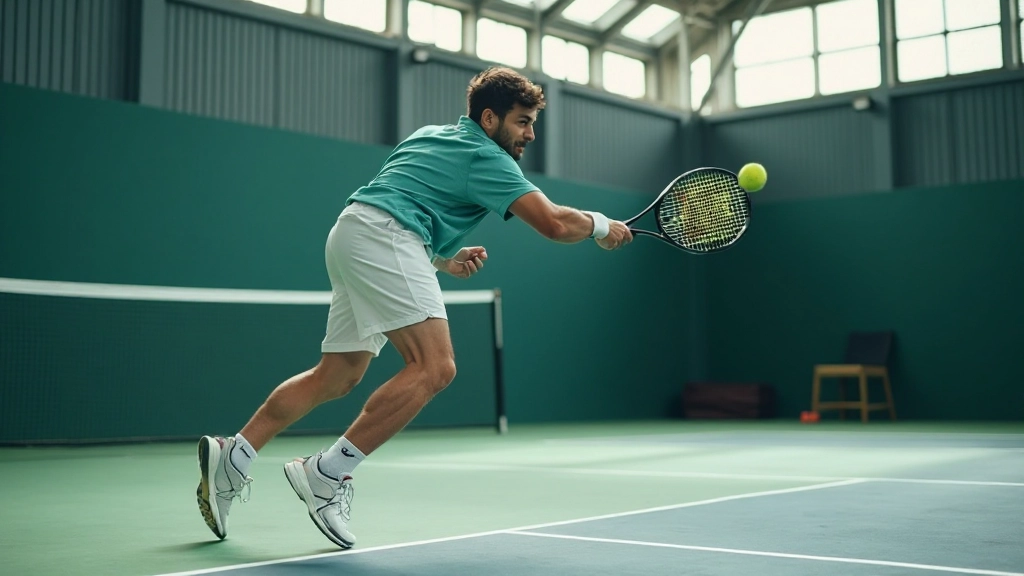
Volley technique encompasses a range of movements adapted to different ball heights, speeds, and incoming trajectories. The forehand volley and backhand volley represent the primary technical patterns, each requiring specific grip adjustments, footwork coordination, and contact point mechanics.
The forehand volley initiates from a neutral grip position, transitioning toward a continental or eastern forehand grip. The stroke movement involves minimal backswing, emphasizing compact preparation. The racket arm maintains a bent elbow position while the non-racket arm assists with balance and upper body rotation.
Contact point placement occurs slightly forward of the body, ensuring offensive ball striking angles. The follow-through remains abbreviated, with the racket moving toward the intended target line rather than across the body. This technical approach enables rapid preparation for subsequent net shots and minimizes recovery time.
Backhand volley technique mirrors forehand mechanics with appropriate side-specific adaptations. The continental grip provides consistent positioning for both volley variations. Upper body rotation initiates the stroke, with the non-racket hand positioned to guide racket preparation and maintain balanced stance.
Contact mechanics emphasize a forward strike pattern, with the racket moving through the ball rather than into the body. This directional movement pattern produces firm contact while allowing for varied volley placements across the court. The compact nature of backhand volleys enables effective response to low-bouncing or wide balls at net.
High volleys occur when the ball reaches shoulder height or above, requiring adjusted stroke mechanics. The racket face angles slightly downward to direct the ball toward the court. The movement pattern emphasizes control rather than aggressive power generation, as the elevated ball position already provides offensive advantage.
Low volleys present different technical challenges, occurring below waist height. These strokes demand increased knee bend and lower body flexibility. The racket angle opens slightly to lift the ball over the net, with emphasis on firm contact and directional precision rather than pace generation.
Footwork coordination enables efficient ball-to-contact transitions. The split step establishes the foundation for directional movement. Small adjustment steps position the body appropriately relative to incoming ball trajectories. The crossover step facilitates lateral court coverage for wide volleys.
Balance maintenance throughout the volley sequence prevents loss of net control. Closed stance positioning (feet roughly parallel to baseline) supports explosive movement preparation. Open stance adaptations accommodate rapid movement requirements, particularly for balls approaching at acute angles.
Repetitive practice of these technical patterns develops consistency and confidence in net play situations. Players benefit from varied practice scenarios that simulate match conditions, including high-speed ball approaches, unexpected angles, and rapid-fire volley sequences.
This content provides educational information regarding tennis technique and training approaches. The information presented reflects general coaching principles and technical considerations. Individual training outcomes depend on numerous factors including physical conditioning, practice frequency, coaching guidance, and personal athletic development. Players should consult with qualified tennis instructors and sports medicine professionals when developing training programs, particularly when addressing technical modifications or managing injury considerations. Training approaches should be adapted to individual skill levels, physical capacities, and competitive objectives.
Net positioning translates technical proficiency into tactical advantage through strategic point construction. The approach shot selection determines net positioning quality, with different shot types producing varying opponent response patterns and court geometry advantages.
Approach shots function as transition mechanisms, converting defensive or neutral baseline positions into offensive net opportunities. The directional placement of approach shots influences opponent positioning and shot response options. Directing the approach shot toward the sideline typically forces the opponent to produce a defensive response, enabling improved net positioning and offensive volley opportunities.
Depth and pace considerations affect opponent recovery time and shot quality. A firm, deep approach shot limits opponent movement options and recovery capabilities. Conversely, approach shots lacking depth provide opponents with elevated ball positions and more aggressive response options, potentially complicating net advancement safety.
Volley placement strategies emphasize court geometry and opponent positioning. Volleys directed toward open court areas exploit space and force extended reaching motions from the opponent. Cross-court volley placements frequently provide better defensive recovery positioning than down-the-line alternatives, though tactical situations determine optimal choices.
Volley depth considerations affect point outcomes. Shallow volleys landing near the service line often force opponents toward the net, potentially enabling follow-up finishing shots. Deeper volleys positioned near the baseline restrict opponent movement options and reduce return opportunities.
Net control enables systematic point conclusion through progressive volley aggression. Early net volleys establish position, with subsequent volleys increasingly targeting finishing opportunities. The combination of placement, pace, and direction in successive volleys creates points where opponents face limited options for effective returns.
Recognizing finishing opportunities prevents unnecessary extended rallies. Volleys positioned away from opponent recovery zones, particularly those requiring significant court coverage or directional changes, represent optimal point-conclusion moments.

Systematic training approaches develop net play proficiency through progressive complexity and match-simulation scenarios. Training methodologies incorporate technical refinement, tactical decision-making, and competitive pressure simulation.
Foundational volley drills establish basic stroke mechanics and consistency. Stationary volley drills, where players remain at net while coach or partner provides varied ball trajectories, develop fundamental technique without movement complexity. These drills enable focus on contact point mechanics, racket angle adjustments, and directional control.
Dynamic volley drills introduce movement requirements, incorporating footwork patterns and court coverage. Players respond to directional ball placements while maintaining balanced positioning. Progressive increases in ball speed and trajectory variety enhance adaptability and responsive capacity.
Match-simulation drills recreate competitive scenarios, including approach shot sequences, rapid volley exchanges, and finishing opportunities. These drills develop decision-making under pressure and build confidence in match-specific situations.
Consistent practice frequency enables progressive skill development. Weekly practice sessions incorporating multiple drill variations maintain technical proficiency while introducing progressive complexity. Practice session duration and intensity should align with individual training capacity and competitive schedule requirements.
Integration of net play practice within comprehensive training programs ensures balanced skill development across all court areas. Players benefit from combining net play practice with baseline movement drills, serve development, and return-of-serve training for comprehensive competitive preparation.
Players developing net proficiency frequently encounter specific technical and tactical challenges requiring targeted analysis and adjustment strategies.
Determining optimal approach shot timing influences net positioning quality and opponent response options. Early approach shot execution may result in elevated ball positioning for opponent returns, while delayed approaches reduce net advantage opportunities. Analysis of shot depth, opponent positioning, and court geometry guides timing decisions.
Match situations frequently present high-speed ball approaches and unexpected angles. Developing consistency under these conditions requires exposure to varied practice scenarios and competitive simulations. Confidence development through successful repetition enhances pressure performance.
Low volleys demand specific technical adjustments including increased knee bend and racket angle modifications. Many players experience inconsistency with low balls due to limited practice exposure. Dedicated low volley drill work addresses this technical gap.
Movement from approach shot completion to net positioning establishment requires coordinated footwork. Inefficient transition steps reduce court coverage capability and net control. Split step execution at appropriate timing proves critical for effective positioning.
Determining appropriate moments for aggressive finishing shots versus defensive positioning requires tactical awareness. Premature aggressive attempts may result in unforced errors, while overly conservative approaches miss point-conclusion opportunities. Match experience and tactical analysis develop sound decision-making patterns.
Rapid grip adjustments between approach shots and volley execution enable appropriate racket positioning. Incomplete grip transitions result in inconsistent contact mechanics and directional control. Repetitive drill work develops automatic transition patterns.
Advanced net play integration requires systematic incorporation of volley proficiency into overall competitive strategy. Players evaluate opponent strengths and weaknesses to determine appropriate net play frequency and tactical approaches.
Opponents demonstrating baseline strength and comfort typically benefit from aggressive net advancement strategies, reducing extended baseline rallies where baseline specialists possess advantage. Conversely, opponents with weaker net technique may require more cautious approach strategies, allowing baseline continuation when appropriate.
Tournament-level competition demands adaptation of net play approach based on surface characteristics. Clay court conditions produce slower ball speeds and higher bounces, affecting volley contact points and timing requirements. Grass surfaces produce lower bounces and faster conditions, requiring adjusted footwork and anticipation patterns. Hard court play typically presents intermediate conditions between clay and grass characteristics.
Psychological aspects of net play significantly influence performance consistency. Players approaching the net with confidence and offensive mindset typically produce better results than those hesitating or playing defensively. Developing positive associations with net play through successful practice experiences builds this confidence.
Acceptance of occasional volley errors as learning opportunities rather than failures reduces pressure-related performance decline. High-level players recognize that aggressive net play necessarily involves some unsuccessful attempts, and this element represents an acceptable component of overall competitive approach.
Continuous refinement through competition exposure enables players to develop intuitive tactical decision-making regarding volley placement, approach timing, and finishing opportunities. Match play experience provides valuable learning that drill work alone cannot replicate.
Essential techniques for developing consistent and powerful ground strokes with focus on biomechanical efficiency, grip optimization, and tactical application in baseline play.
Read More
Comprehensive guide to developing explosive serves through biomechanical analysis, progressive training methodologies, and tactical serve placement strategies.
Read More
Detailed exploration of movement patterns, balance recovery, and strategic court positioning approaches for optimizing offensive and defensive play.
Read More